SANParks Handyman Vacancy at Mountain Zebra National Park: R168,217 – R224,018 Annual Package

SANParks Handyman Vacancy at Mountain Zebra National Park: R168,217 – R224,018 Annual Package

SANParks Handyman Vacancy at Mountain Zebra National Park

South African National Parks (SANParks) has opened a Handyman position at Mountain Zebra National Park, and for someone with genuine, hands-on maintenance skills wanting to work in one of the country’s most scenic conservation areas, this is a solid, accessible role worth serious consideration.

  • Closing Date: 24 September 2026
  • Location: Mountain Zebra National Park, Eastern Cape
  • Salary: Remuneration based on the Paterson B2 job grade, plus allowances and benefits as specified in SANParks’ HR Tariff Document and Conditions of Service (specific rand figure not disclosed on this listing)

Job Overview

The Handyman role at Mountain Zebra National Park exists to keep the park’s buildings, equipment, and general infrastructure in good working order. Mountain Zebra National Park, known for its rolling grasslands and the conservation success story of the Cape mountain zebra, relies on a small but essential maintenance team to keep tourist accommodation, staff facilities, and park infrastructure functioning smoothly, and this Handyman position sits right at the centre of that work.

Reporting to the relevant Line Manager, the successful candidate takes on a genuinely varied, hands-on maintenance role rather than being confined to one narrow task.

Job Description

The Handyman is responsible for carrying out semi-skilled maintenance tasks across a range of trades, including basic plumbing, carpentry, electrical work, and equipment repairs, all in accordance with the park’s predetermined quality and productivity standards. Given that Mountain Zebra National Park operates in a remote, self-sufficient environment, the Handyman needs to be genuinely adaptable, ready to tackle whatever maintenance issue arises on a given day rather than sticking strictly to a single trade.

Key Duties and Responsibilities

  • Carry out general building maintenance tasks, including basic repairs and installations
  • Perform plumbing maintenance and repair work as needed
  • Undertake carpentry maintenance tasks across park buildings and structures
  • Attend to minor electrical works and equipment repairs
  • Maintain and service air conditioners and refrigeration units where required
  • Complete general administrative tasks tied to maintenance work, such as maintenance logs and job records
  • Work safely and in line with the Occupational Health and Safety Act at all times
  • Be available to work weekends and public holidays as operationally required
  • Undergo a practical skills assessment as part of the selection process

Requirements and Qualifications

To be considered for this position, applicants generally need to meet the following criteria:

  • A minimum of three years’ practical experience in a technical or maintenance-related field
  • Good written and verbal communication skills in English
  • Basic knowledge of building maintenance, plumbing, carpentry, and equipment repairs
  • Working knowledge of the Occupational Health and Safety Act
  • Basic general administration skills
  • Ability to work under pressure and in sometimes unfavourable field conditions
  • Willingness and ability to work weekends and public holidays as required
  • A Trade Certificate in Electrical, Aircon, Refrigeration, Plumbing, or a related field is considered an advantage, though not always a strict requirement

Applicants should also note that Mountain Zebra National Park does not provide official staff accommodation for this position, so successful candidates will need to arrange their own accommodation in the surrounding area.

Skills and Competencies

Beyond the formal entry requirements, candidates who tend to stand out in SANParks’ selection process for maintenance roles generally show:

  • Genuine, hands-on practical skill across multiple trades rather than narrow specialisation in just one
  • Strong problem-solving ability, particularly useful when working in a remote park environment without immediate access to specialist contractors
  • Reliability and a solid work ethic, especially given the weekend and public holiday availability required
  • Good organisational skills, useful for maintaining accurate maintenance records and job logs
  • A safety-conscious mindset suited to working with electrical, plumbing, and mechanical systems
  • Comfort working independently and adapting quickly to varied, sometimes unpredictable maintenance tasks
  • A genuine appreciation for conservation work and the unique demands of working within a national park setting

Why This Role Is Worth Considering

For skilled tradespeople in the Eastern Cape, this kind of maintenance role offers a genuinely stable, meaningful way to put practical skills to use within one of South Africa’s respected conservation institutions. Working at Mountain Zebra National Park means being part of a small, close-knit operational team supporting both tourism infrastructure and the park’s broader conservation mission, a genuinely different working environment from a typical urban maintenance job. For candidates who enjoy variety, the outdoors, and hands-on problem solving, this role offers a career path that few conventional trade jobs can match.

About SANParks

South African National Parks (SANParks) was formed in 1926, originally as the National Parks Board, through an act of parliament, making it one of the oldest conservation authorities of its kind in the world. Today, SANParks manages 19 to 21 national parks and several marine protected areas across South Africa, including well-known destinations like Kruger National Park, Table Mountain National Park, and Mountain Zebra National Park itself, home to one of the great conservation success stories involving the Cape mountain zebra.

SANParks operates under a legal mandate set out in the National Environmental Management: Protected Areas Act of 2003, tasked with conserving, protecting, controlling, and managing national parks and their associated biodiversity and cultural heritage. As a public entity structured to be substantially self-funding, SANParks generates roughly 80% of its operating budget through its own ecotourism business, supporting its core conservation mandate through tourist accommodation, activities, and park entry fees.

Beyond conservation and tourism, SANParks employs a genuinely diverse workforce spanning field rangers, hospitality staff, scientists, and essential maintenance and support roles like this Handyman position, all working together to keep South Africa’s protected areas running smoothly for both wildlife and visitors. SANParks is committed to the principles of employment equity, with preference given to Previously Disadvantaged Individuals (PDI) and Historically Disadvantaged South Africans (HDSA). For skilled tradespeople looking for stable, meaningful work within a respected conservation institution, SANParks’ maintenance and operational roles offer a genuinely rewarding way to build a career.

How to Apply

Interested candidates who meet the requirements should submit a detailed CV, along with certified copies of qualifications, an ID document, and a driver’s licence where applicable, using the official application process listed on the vacancy page. Applications should be emailed to the Mountain Zebra National Park vacancies address, and it’s essential to quote the correct reference number in the subject line, since applications that don’t follow the specified format are unlikely to be considered. If you haven’t heard back within 21 days of the closing date, you should consider your application unsuccessful, as SANParks limits correspondence to shortlisted candidates only.

CLICK HERE TO APPLY

Shoprite Supply Chain Graduate Programme 2026/2027

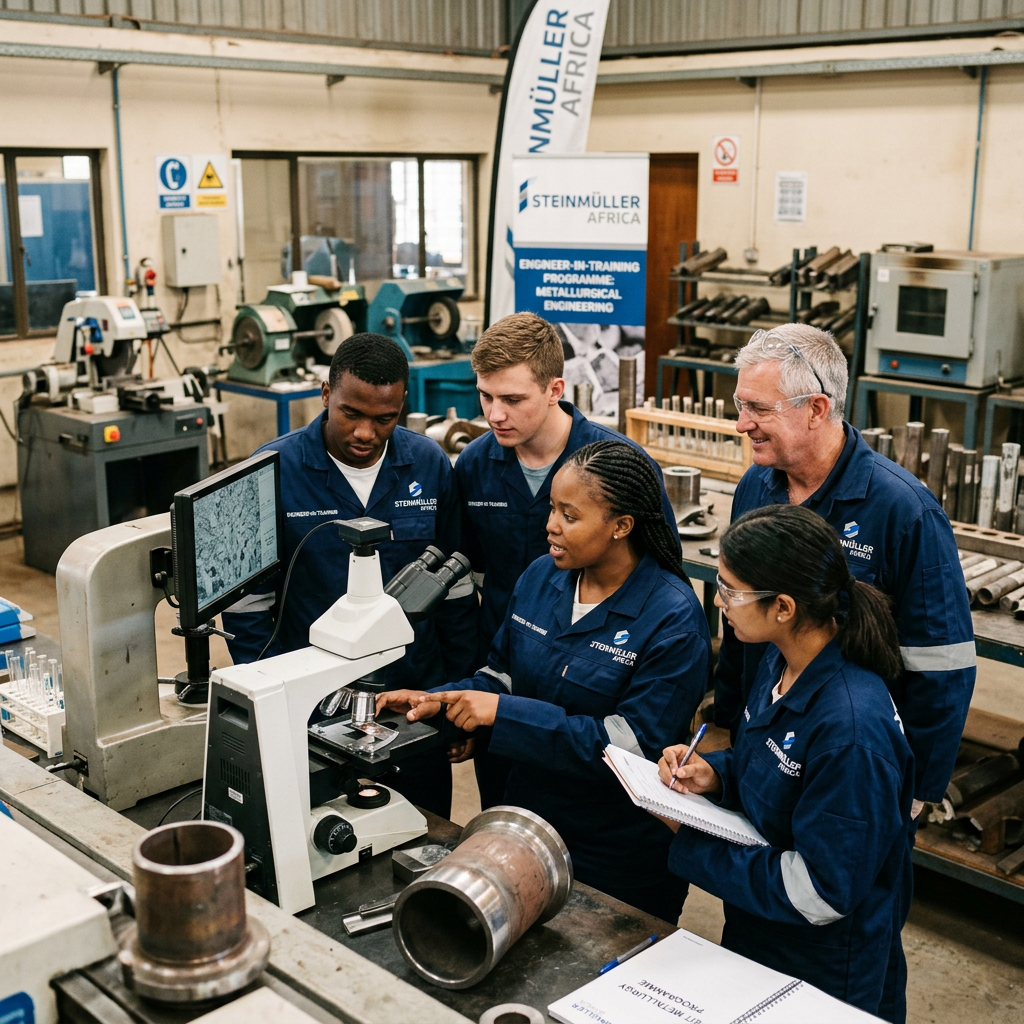
Steinmüller Africa Engineer-in-Training Programme for Metallurgical Engineering Graduates

Steinmüller Africa Engineer-in-Training Programme for Metallurgical Engineering Graduates

Steinmüller Africa Engineer-in-Training Programme for Metallurgical Engineering Graduates

Steinmüller Africa, a respected name in steam generation engineering and industrial services, has opened its Engineer-in-Training (EIT) Programme specifically for Metallurgical Engineering graduates, and for young engineers wanting structured, mentored exposure to real industrial engineering work, this is a genuinely credible way to start a technical career.

  • Closing Date: 25 September 2026
  • Location: Sandton, Gauteng, with required site visits mainly to Mpumalanga and Gauteng Provinces
  • Salary/Stipend: Not disclosed publicly on the listing. However, benefits are confirmed to include pension, medical aid, an annual bonus, an anniversary bonus, and a long service bonus.

Programme Overview

The Engineer-in-Training programme is Steinmüller Africa’s structured pathway for turning strong metallurgical engineering graduates into fully capable, practically experienced engineers. Rather than a generic internship, this is a genuine EIT track built around Steinmüller Africa’s core industrial focus: steam generation engineering, a field where metallurgical expertise plays a genuinely critical role in material selection, failure analysis, and the lifetime performance of high-pressure boiler and pressure-part systems.

Being based in Sandton with site visits extending into Mpumalanga and Gauteng means EIT candidates gain a genuine mix of head-office structure and real, hands-on industrial site exposure, rather than being confined to a desk for the full duration of the programme.

Job Description

Successful candidates will be placed on a structured EIT programme, working alongside experienced engineers while being progressively exposed to real projects and site conditions. Given Steinmüller Africa’s specialisation in boiler pressure parts, welding technology, and steam generation systems, metallurgical engineering trainees can expect exposure to material behaviour, weld integrity, corrosion and failure analysis, and lifetime extension planning, all core concerns within the company’s industrial service offering.

Key Duties and Responsibilities

  • Participate fully in the structured Engineer-in-Training development programme
  • Undertake required site visits, mainly across Mpumalanga and Gauteng Provinces, to gain practical, on-the-ground engineering exposure
  • Support metallurgical assessment, material evaluation, and failure analysis tasks under supervision
  • Assist experienced engineers with projects tied to steam generation, boiler pressure parts, and related industrial systems
  • Build practical understanding of welding and environmental technology processes relevant to the metallurgical field
  • Contribute to lifetime extension planning and maintenance-related engineering tasks as guided by senior staff
  • Maintain accurate technical records and documentation tied to assigned projects
  • Take on additional job-related engineering tasks as reasonably required during the training period

Requirements and Qualifications

To be considered for this EIT programme, applicants need to meet the following criteria:

  • Proof of successful completion of a B.Eng. or B.Sc. in Metallurgical Engineering
  • A valid driver’s licence is advantageous, given the required site visits to Mpumalanga and Gauteng
  • Willingness to travel to and work from various operational sites as needed during the programme

All academic results will be considered as part of the shortlisting process, so applicants should make sure their full academic record is submitted clearly alongside their application, rather than a partial or incomplete transcript.

Skills and Competencies

Steinmüller Africa is looking for graduates who show genuine technical readiness alongside a willingness to learn in a real industrial setting. Traits that tend to stand out include:

  • Strong academic performance in Metallurgical Engineering, particularly in materials science and failure analysis coursework
  • Genuine interest in industrial engineering, steam generation, and materials-related problem solving
  • Willingness to travel and work across different site locations as part of the training experience
  • Strong attention to detail, particularly important when assessing material integrity and failure conditions
  • Good communication skills, useful when working alongside experienced engineers and site personnel
  • A safety-conscious mindset suited to industrial site environments
  • Genuine long-term interest in building a career in engineering within the power generation and industrial services sector

Why This Programme Is Worth Considering

For metallurgical engineering graduates, this kind of structured EIT placement offers something genuinely valuable: real exposure to how materials science applies in a live, high-stakes industrial setting, rather than confined to laboratory theory alone. Steinmüller Africa’s decades-long focus on boiler manufacturing and steam generation for South Africa’s power stations means EIT graduates are training within a company that understands metallurgical engineering at a genuinely deep, applied level. Confirmed benefits like pension, medical aid, and multiple bonus structures also signal a company genuinely invested in retaining and developing the engineers it trains, rather than treating the EIT programme as a short-term, disposable arrangement.

About Steinmüller Africa

Steinmüller Africa first entered the South African market in 1962, and for more than six decades it has played a central role in building and maintaining the country’s power generation infrastructure. The company fabricated boiler pressure parts for many of the iconic power stations that built South Africa’s national grid, and it remains an Original Equipment Manufacturer (OEM) to numerous Eskom power stations to this day, having supplied well over 20,000MW of steam generation capacity to the South African market since its founding.

Today, Steinmüller Africa offers comprehensive expertise across welding and environmental technology, manufacturing, maintenance, lifetime extension planning, and project management, alongside a wide range of cranes, lifting gear, welding equipment, and mobile offices for site establishment. All of these services are built around the company’s core industrial focus: steam generation. Steinmüller Africa forms part of the international Bilfinger Group, sharing ownership with local shareholder Torre Technologies (Pty) Ltd, and works closely alongside its sister company, Bilfinger Intervalve Africa, and close partner Eduardo Construction, to retain critical skills within the field.

Beyond its core engineering and manufacturing work, Steinmüller Africa has placed strong emphasis on developing the next generation of engineers through its structured EIT programmes across disciplines including Mechanical, Structural, Civil, Chemical, and Metallurgical Engineering, alongside Red Seal apprentice programmes and its own CPD-accredited Boiler Technology Course. For metallurgical engineering graduates looking to build a genuinely respected, technically demanding career in one of the country’s most established industrial engineering environments, Steinmüller Africa’s EIT programme offers a credible and well-structured route in.

How to Apply

Applicants should submit scanned copies of their CV, ID, and academic records with their initial application, with certified copies required later at the interview phase. Make sure your CV is focused specifically on your Metallurgical Engineering background, highlighting your degree, final-year project, any practical laboratory work, technical skills, and site exposure gained during your studies. If you hold a driver’s licence, make sure it’s clearly visible on your CV, since this is specifically flagged as advantageous for this role. Apply directly through Steinmüller Africa’s official application portal, and review all listed requirements carefully before submitting.

CLICK HERE TO APPLY

Eskom Learner Artisan Opportunities: Twelve (12) Positions Available at Matimba Power Station

Shoprite Supply Chain Graduate Programme 2026/2027

Shoprite Supply Chain Graduate Programme 2026/2027

Shoprite Supply Chain Graduate Programme 2026/2027

Shoprite Group, Africa’s largest supermarket retailer, has opened its Supply Chain Graduate Programme, and for graduates wanting genuine, hands-on exposure to how one of the continent’s biggest retail logistics operations actually runs, this rotational programme across five major cities is well worth serious consideration.

  • Closing Date: 30 September 2026
  • Location: Cape Town, Centurion, Bloemfontein, Gqeberha, and Durban, South Africa
  • Salary/Stipend: Not disclosed publicly on the listing. The Shoprite Group’s graduate programmes are typically structured, paid positions, though the exact figure for this specific intake isn’t stated.

Programme Overview

Reference number SHO260910-3, this full-time graduate development opportunity places successful candidates directly into Shoprite’s Supply Chain environment as Distribution Centre Trainee Managers. Rather than being confined to one department, participants rotate through different Supply Chain and Distribution Centre functions, building a genuinely broad understanding of how products actually move through one of South Africa’s largest retail supply chains, from warehousing and inventory management through to transport and final distribution.

With five separate locations on offer, this is a genuinely national programme, giving graduates across the country a realistic shot at joining without necessarily needing to relocate to a single head-office hub.

Job Description

Graduates on this programme are integrated fully into Shoprite’s day-to-day Supply Chain operations, gaining hands-on experience across warehousing, logistics, inventory control, and distribution functions. Beyond the operational exposure, the programme is built around leadership development, combining structured coaching and mentoring with genuine management experience, so participants graduate the programme with both technical supply chain knowledge and early people-management skills.

Key Duties and Responsibilities

  • Rotate through different Supply Chain and Distribution Centre functions to build broad operational understanding
  • Gain hands-on experience in warehousing, inventory management, and distribution processes
  • Support day-to-day logistics and transport operations within the assigned distribution centre
  • Participate in operational analysis and contribute to process improvement initiatives
  • Build leadership capability through structured coaching, mentoring, and practical management experience
  • Work closely with cross-functional teams and build relationships with stakeholders across the business
  • Contribute to business projects tied to supply chain efficiency and performance

Requirements and Qualifications

To be considered for this programme, applicants need to hold one of the following qualifications, or a closely related field:

  • BCom in Supply Chain Management
  • Logistics Management
  • BEng in Industrial Engineering
  • BCom or BSc in Operations Research
  • Other related supply chain, logistics, or operations-focused qualifications

No prior work experience is required, making this a genuine entry point for recent graduates. Applicants do need to be willing and able to work at whichever of the five listed locations they are placed in, so a degree of geographic flexibility strengthens an application considerably.

Skills and Competencies

Beyond the formal qualification requirements, candidates who tend to stand out in Shoprite’s selection process for this kind of rotational programme generally show:

  • Strong interpersonal and communication skills, given the cross-functional stakeholder exposure involved
  • Genuine analytical ability, particularly around data, planning, and process improvement
  • A basic working understanding of how retail logistics and distribution centres operate
  • Willingness to relocate to any of the five listed cities if required
  • Adaptability, given the rotational nature of the programme across different supply chain functions
  • A proactive, hands-on attitude toward learning operational processes from the ground up
  • Careful attention to detail when completing application documents and assessments

Why This Programme Is Worth Considering

For supply chain and logistics graduates, this programme offers something genuinely valuable: real, rotational exposure across one of Africa’s largest retail supply chain networks, rather than a narrow, single-function internship. Shoprite Group employs over 174,000 people and operates more than 3,700 stores across 8 African countries, meaning graduates joining this programme are learning logistics at a genuinely significant scale. The combination of practical operational exposure with structured leadership coaching also means strong performers leave with both technical competence and early management experience, a combination that carries real weight whether a career continues within Shoprite or moves into broader FMCG and retail logistics elsewhere.

About Shoprite Group

Shoprite Holdings Ltd is Africa’s largest supermarket retailer and one of the largest retail companies in the world, headquartered in Brackenfell, Cape Town. Founded in 1979 when PEP Stores purchased a small eight-store grocery chain, Shoprite has grown into a retail giant operating more than 3,700 stores, including 573 franchise outlets, across 8 African countries, serving 36.5 million Xtra Savings rewards customers.

Listed on the Johannesburg Stock Exchange and A2X Markets, with secondary listings on the Namibian and Lusaka stock exchanges, Shoprite reported revenue of R274.8 billion in 2026. The Group’s portfolio spans well-known brands including Checkers, Usave, House & Home, OK Furniture, and Freshmark, alongside financial services offerings like Money Market and Shoprite Send. With over 174,000 employees, Shoprite Group stands as the largest private sector employer in South Africa.

Beyond this Supply Chain Graduate Programme, Shoprite runs a broader talent development pipeline including bursary programmes in Accounting, Agricultural Sciences, Supply Chain, and Retail Business Management, alongside additional graduate and internship opportunities across its various business units. Shoprite has stated its commitment to fostering a diverse and inclusive workplace, creating an environment where every employee’s talent, perspective, and background are valued. For graduates looking to build a genuine, large-scale career in retail logistics and supply chain management, Shoprite’s Supply Chain Graduate Programme offers a credible, well-structured route into the industry.

How to Apply

Applications for this Supply Chain Graduate Programme are submitted online, and applicants must use reference number SHO260910-3 when applying. Read through all requirements carefully before submitting, and make sure your personal details and document uploads are accurate, since meeting the minimum requirements is essential for your application to even be reviewed. Applicants who haven’t received feedback within 14 days of the closing date should consider their application unsuccessful, given the high volume of applications a programme of this scale typically attracts. Submitting well before the 30 September 2026 deadline is strongly advised, since late applications will not be considered.

CLICK HERE TO APPLY

How to Write a Bursary Motivational Letter That Makes the Selection Panel Notice You

Tiger Brands Workplace Experience Student: Sales & Distribution in Sasolburg

Tiger Brands Workplace Experience Student: Sales & Distribution in Sasolburg

Tiger Brands Workplace Experience Student: Sales & Distribution in Sasolburg

Commerce and supply chain students searching “Tiger Brands Workplace Experience 2026,” “Sales and Distribution internships Free State,” or “FMCG student placements Sasolburg” have found exactly the right opportunity. Tiger Brands, Africa’s largest listed manufacturer of fast-moving consumer goods, has opened its Workplace Experience Student programme within its Sales & Distribution function in Sasolburg, and for students needing genuine, practical workplace exposure to complete their qualification, this placement offers real, hands-on experience rather than a token internship label.

  • Closing Date: 16 September 2026
  • Location: Sasolburg, Fezile Dabi District Municipality, Free State
  • Salary/Stipend: Not disclosed publicly. Tiger Brands’ Workplace Experience Student programmes typically operate as structured, paid placements, though the exact stipend figure isn’t stated on the listing.

Job Overview

This is a full-time, onsite Workplace Experience placement specifically designed to help students complete a Work Integrated Learning (WIL) requirement tied to their qualification. Rather than a generic internship, this programme is built around the Sales & Distribution function, giving participants direct exposure to how a major FMCG business actually manages logistics, fleet, and customer-facing sales operations at ground level.

Being based at Sasolburg means the successful candidate trains within one of Tiger Brands’ operational sites in the Free State, gaining exposure to a genuinely varied mix of administrative, logistics, and customer relationship tasks that keep a distribution operation running smoothly.

Job Description

The successful candidate will work with a cross-functional team to complete a Work Integrated Learning project assigned by their Line Manager, while also picking up genuine day-to-day exposure to the Sales & Distribution environment. Expect a blend of administrative support tied to fleet and crate management, alongside relationship-building work that introduces students to the customer-facing side of FMCG distribution.

Key Duties and Responsibilities

  • Work with a cross-functional team to complete an assigned Work Integrated Learning project
  • Support crate control processes, including counting, ordering, and phoning clients regarding crates
  • Assist with general administrative work tied to the workshop and fleet
  • Create purchase orders for vehicle-related work and repairs
  • Help manage vehicle defects, including driver daily checklists and related documentation
  • Develop and maintain a working knowledge of Tiger Brands products within the relevant portfolio, along with sales systems and procedures
  • Build strong business relationships with store management to provide service and value beyond customer expectations
  • Attain on-the-job work experience aligned with personal career aspirations

Requirements and Qualifications

To be considered for this programme, applicants need to meet the following criteria:

  • Currently studying towards a qualification requiring Work Integrated Learning (WIL) to graduate
  • No more than one year of full-time work experience in your field of study
  • South African citizenship and valid work authorisation in South Africa
  • Willingness to be based in Sasolburg for the duration of the placement

Applicants will also need to submit the following supporting documents alongside their application:

  • An updated, comprehensive CV
  • A South African ID document
  • Academic transcripts and supporting qualification documents
  • Proof of P1 and P2 requirements from their institution, confirming the practical component needed to complete their qualification

Skills and Competencies

Tiger Brands looks for Workplace Experience Students who bring genuine energy and reliability to a fast-moving distribution environment. Candidates who tend to stand out generally show:

  • Strong administrative accuracy, particularly important when handling crate counts, purchase orders, and fleet documentation
  • Good telephone manner and clear communication, given the client-facing crate and relationship-building tasks
  • A proactive approach to learning, comfortable asking questions and taking initiative
  • Strong organisational skills, useful when juggling multiple small administrative processes at once
  • A genuine interest in sales, logistics, or distribution as a career direction
  • Reliability and consistency, since distribution operations depend on accurate, timely administrative support
  • Comfort working within a team, given the cross-functional nature of the assigned WIL project

Why This Programme Is Worth Considering

For students needing practical experience to complete their qualification, this kind of placement solves a genuinely common problem: many academic programmes require a WIL component, but finding a credible, well-structured placement isn’t always easy. Being placed within Tiger Brands’ Sales & Distribution function gives students real exposure to logistics, fleet management, and customer relationship skills that translate directly into supply chain, sales, and operations careers well beyond this specific placement. Backed by the credibility of one of Africa’s largest listed FMCG companies, this experience adds genuine substance to a CV, rather than a vague “internship” line with little to show for it.

About Tiger Brands

Tiger Brands is proudly Africa’s largest listed manufacturer of fast-moving consumer goods (FMCG), with a core business built around the manufacturing, marketing, and distribution of everyday branded food, beverage, home, and personal care products. Founded in 1921 as Tiger Oats Limited, the company’s very first product was a breakfast oatmeal brand called Jungle Oats, which remains part of the portfolio to this day. Headquartered in Waterfall City, Midrand, Tiger Brands now operates 34 manufacturing plants across South Africa and exports to growing markets across the rest of the African continent.

Listed on the JSE under the ticker TBS, Tiger Brands reported revenue of R34.4 billion in 2025 and employs more than 8,000 people across its operations. The company has built its culture around a strong sense of purpose, describing itself as an intimate part of everybody’s daily life through its iconic, award-winning brands, with a stated commitment to exploring further, roaring louder, and growing together.

Beyond this Workplace Experience programme, Tiger Brands runs a broader talent pipeline including its Future Leaders Graduate Development Programme, structured learnerships, bursaries, and additional Work Integrated Learning placements across functions like Production, Sales & Distribution, and Marketing. In line with its Employment Equity Plan, preference may be given to candidates from under-represented designated groups. For students needing genuine, credible workplace experience to complete their qualification, Tiger Brands’ Workplace Experience Student programme offers a solid, real-world starting point.

How to Apply

Before applying, make sure every required document is ready and accurate: an updated CV, your South African ID, academic transcripts, and proof of your P1 and P2 requirements from your institution confirming that Work Integrated Learning is needed to complete your qualification. Incomplete applications are unlikely to progress, so it’s worth double-checking everything before hitting submit.

CLICK HERE TO APPLY

How to Write a Bursary Motivational Letter That Makes the Selection Panel Notice You

New Opportunity at Transnet: Work Integrated Non Technical Learner Germiston, Koedoespoort, Saltriver, Durban, Bloemfontein, Uitenhage

New Opportunity at Transnet: Work Integrated Non Technical Learner Germiston, Koedoespoort, Saltriver, Durban, Bloemfontein, Uitenhage

New Opportunity at Transnet: Work Integrated Non Technical Learner Germiston, Koedoespoort, Saltriver, Durban, Bloemfontein, Uitenhage

Location: Germiston, Koedoespoort, Saltriver, Durban, Bloemfontein, Uitenhage

Closing Date: 18 September 2026

Position Purpose

The Work Integrated Learning (WIL) Trainee Programme aims to provide students and recent graduates with practical workplace experience, allowing them to apply their academic knowledge in a real-world environment. This programme is designed to enhance participants’ employability by offering hands-on training, mentorship, and exposure to industry-specific tasks. The WIL trainee programme is conducted over a period of 18 months.

Position Outputs

Task Execution • Assist in specific projects within a department or work-stream. • Perform routine operational tasks under supervision. • Support administrative functions, including documentation and reporting. Learning & Development • Participate in training sessions, workshops, and mentorship programs. • Shadow experienced professionals to gain practical insights. • Engage in problem-solving activities to develop analytical skills.

Communication & Collaboration • Interact with customers, suppliers, and internal teams to understand business needs. • Provide regular updates on assigned tasks and project progress. • Serve as a central contact point for queries and assistance. Research & Analysis • Conduct market research, data collection, and analysis to support business decisions. • Prepare reports and presentations using MS Office tools. • Assist in process improvement initiatives. Compliance & Safety • Follow company policies, procedures, and safety regulations. • Ensure adherence to ethical and professional standards. • Maintain confidentiality and integrity in all tasks.

Qualifications and Experience

Matric certificate/equivalent. Completed all theoretical subjects: N4 to N6- Office Management /Management Assistant/Business Management at TVET College • Must be a South African citizen. • Age between 18- 35. • Preference will be given to People with Disability. • No bursary obligation with another company. • Proof of confirmation letter from the institution (most recent). • Proof of certified Matric certificate, Academic Record and ID.

Competencies: Good written and communication skills. • Basic computer skills. • The ability to work well within a team. • Problem solving skills. • Pays attention to detail. • Willingness to learn. • Interpersonal Skills

About Transnet

Transnet SOC Ltd is a state-owned transport and logistics company in South Africa. It manages the country’s national port, rail, and pipeline networks.

Overview and Key Details

  • Ownership: Wholly owned by the South African government.
  • Leadership: Led by Group Chief Executive Michelle Phillips.
  • Scale: Employs over 55,000 people across multiple divisions.
  • Financials: Reported a net profit of R4.6 billion for the financial year ending March 2026, returning to profitability after consecutive losses.

Operating Divisions

  • Transnet Freight Rail: The largest division, operating heavy-haul freight rail across major economic corridors.
  • Transnet National Ports Authority: Acts as the landlord for South Africa’s port system.
  • Transnet Port Terminals: Manages cargo terminal operations at key national ports.
  • Transnet Pipelines: Transports petroleum and gas products across long distances.
  • Transnet Engineering: Handles manufacturing, upgrading, and maintenance of rolling stock.

HOW TO APPLY

CLICK HERE TO APPLY

DPSA Circular 33 of 2026: Numerous Government Jobs Open for Applications

Eskom Learner Artisan Opportunities: Twelve (12) Positions Available at Matimba Power Station

Eskom Learner Artisan Opportunities: Twelve (12) Positions Available at Matimba Power Station

Eskom Learner Artisan Opportunities: Twelve (12) Positions Available at Matimba Power Station

Eskom, South Africa’s national electricity utility, has opened 12 Learner Artisan positions at its Matimba Power Station in Lephalale, and for young people wanting a genuine, structured route into a skilled trade within the energy sector, this is one of the more substantial intakes on offer right now.

  • Closing Date: 21 September 2026
  • Location: Matimba Power Station, Lephalale, Limpopo
  • Salary/Stipend: Market Related remuneration (specific stipend figure not disclosed on the listing)

Job Overview

Listing reference eskom_006971, this Learner Artisan opportunity offers 12 positions at Matimba Power Station, one of Eskom‘s major coal-fired generation facilities based in Lephalale. The programme falls under Eskom’s Electricity, Energy & Water Supply operations and is structured as an internship-type contract, giving successful candidates institutionalised classroom training combined with genuine, hands-on workplace experience within a live power station environment.

With 12 posts available in a single intake, this is a genuinely sizeable opportunity compared to many smaller, single-post learnerships elsewhere, giving applicants from the Lephalale area and beyond a reasonable shot at selection.

Job Description

Learner Artisans accepted onto this programme will be exposed to the practical and theoretical foundations of a specific trade, working under supervision within Matimba’s maintenance and operational environment. Eskom’s learner artisan model is built around developing genuine trade competence over time, meaning participants aren’t simply observing, but actively building the skills needed to eventually qualify as fully fledged artisans within the power generation sector.

Key Duties and Responsibilities

  • Participate fully in institutionalised classroom-based training relevant to the chosen trade
  • Gain hands-on, on-the-job training within Matimba Power Station’s operational environment
  • Support maintenance-related tasks under the guidance of qualified artisans and supervisors
  • Follow all plant safety regulations and standard operating procedures at all times
  • Build practical technical skills progressively throughout the training period
  • Attend and engage with all scheduled assessments and evaluations tied to the programme
  • Correctly identify and apply the specific training programme selected when applying, since this determines the trade pathway followed

Requirements and Qualifications

To be eligible for this Learner Artisan intake, applicants must meet the following criteria:

  • South African citizenship
  • A Grade 12 (Matric) certificate, or a relevant technical qualification
  • Mathematics and Science each passed with a minimum of 50%
  • Willingness to correctly quote the listing reference number and specify the exact training programme being applied for

Applicants should take particular care to select and clearly state the correct trade or training programme on their application, since Eskom’s recruitment process is built around matching candidates to a specific specialisation from the outset.

Skills and Competencies

While Eskom’s listing doesn’t set out an exhaustive competency framework for this specific intake, candidates who tend to succeed in learner artisan programmes of this nature generally show:

  • A genuine aptitude for, and interest in, mathematics and science-based technical work
  • Strong attention to detail, particularly important in a safety-regulated power station environment
  • Reliability and discipline, given the structured nature of institutionalised training
  • A safety-conscious mindset and willingness to follow plant procedures strictly
  • Good teamwork and communication skills, useful when working alongside qualified artisans and supervisors
  • A genuine, long-term interest in building a career as a qualified artisan within the energy sector

Why This Opportunity Is Worth Considering

For young South Africans in Limpopo who’ve completed Matric with Mathematics and Science but haven’t yet found a way into formal employment or trade training, this programme offers a genuinely valuable solution. Being trained at Matimba, one of Eskom’s significant coal-fired power stations, gives learner artisans exposure to a large-scale, technically demanding industrial environment, building skills that carry real weight across South Africa’s broader energy and industrial maintenance sector. With 12 posts available, this intake also offers a meaningfully wider net of opportunity than many single or double-post learnerships elsewhere in the country.

About Eskom

Eskom Holdings SOC Ltd, commonly known as Eskom, is South Africa’s state-owned electricity public utility, established in 1923 as the Electricity Supply Commission (ESCOM). Headquartered in Sunninghill, Sandton, Eskom stands as the largest producer of electricity on the African continent and represents South Africa within the Southern African Power Pool, reflecting its central role not just nationally but regionally.

Eskom’s core business spans the generation, transmission, and distribution of electricity, operating a diverse mix of power generation facilities including coal-fired power stations like Matimba, gas turbines, and a growing portfolio of renewable energy sources. With more than 42,000 employees and total assets exceeding R1 trillion, Eskom remains one of the most significant employers and infrastructure operators in South Africa, playing a critical role in the country’s broader economic stability.

Eskom has built a long-standing commitment to youth development through structured learner artisan, apprenticeship, and graduate-in-training programmes across its various power stations and business units, aimed at addressing skills shortages within the utility and the broader energy sector. Eskom is committed to equality, employment equity, and diversity, with preference given, though not limited, to candidates from under-represented designated groups, and candidates with disabilities are actively encouraged to apply. For young South Africans looking to build a genuine, long-term career as a qualified artisan within one of the country’s most essential industries, Eskom’s Learner Artisan Programme offers a credible and well-established route in.

How to Apply

Applications must be submitted online through Eskom’s official careers portal before the 21 September 2026 closing date. When applying, make sure to quote listing reference eskom_006971 exactly, and clearly specify the training programme or trade you are applying for, since this determines your placement pathway. Double-check that your contact details, including your cellphone number and email address, are accurate and up to date on your application profile, and ensure all required documents are clear and correctly uploaded. If you haven’t been contacted within 28 days of the closing date, you should accept that your application was unsuccessful, as is standard practice across Eskom’s recruitment advertisements.

CLICK HERE TO APPLY

DPSA Circular 33 of 2026: Numerous Government Jobs Open for Applications

How to Write a Bursary Motivational Letter That Makes the Selection Panel Notice You

How to Write a Bursary Motivational Letter That Makes the Selection Panel Notice You

Bursary Motivational Letter

How to Write a Bursary Motivational Letter That Makes the Selection Panel Notice You

Writing a bursary motivational letter can feel intimidating. You may be sitting at the kitchen table, looking at a blank page, wondering how to explain your dreams, your financial situation, and your academic journey without sounding desperate or repeating what is already on your application form. The truth is that a strong letter does not require complicated English or dramatic storytelling. It requires honesty, structure, and a clear explanation of why supporting you would be a worthwhile investment.

Every year, many South African students apply for bursaries. Some are high-achieving learners from rural schools. Others are university students struggling to remain registered because of unpaid fees. Some are the first people in their families to attend university or college. Their circumstances may be different, but they all face the same challenge: they must convince a selection panel that they are serious, capable, and deserving of financial support.

Your letter gives the panel something that marks and documents cannot always provide. It allows them to see the person behind the percentages. It explains what motivates you, what you have overcome, what you hope to achieve, and how the bursary could change your future.

What the selection panel is really looking for

Before you start writing, it helps to understand what happens on the other side of the application. A bursary selection panel is usually not asking, “Can this applicant write impressive sentences?” They are asking practical questions:

  • Does this student meet the basic requirements?
  • Is the student genuinely committed to the proposed field of study?
  • Is there a real financial need?
  • Has the student shown discipline and potential?
  • Does the student’s goal align with the organisation’s purpose?
  • Will the student use the opportunity responsibly?
  • Has the applicant followed the instructions properly?

Your letter should answer these questions naturally. You do not need to write the questions and then respond to them one by one. Instead, organise your story so that the answers become clear.

For example, saying, “I am hardworking and passionate” is not very convincing on its own. Showing that you maintained strong marks while caring for younger siblings, volunteering at school, or travelling a long distance to attend classes is much more powerful. Evidence gives your words weight.

Start with a proper structure

A well-written letter should be easy to read. Do not make the panel search through a wall of text to find your main point.

A simple structure works well:

  1. Your contact details and the date.
  2. The name of the organisation or bursary programme.
  3. A respectful greeting.
  4. A short introduction.
  5. Your academic background and chosen course.
  6. Your financial circumstances.
  7. Your personal qualities and achievements.
  8. Your career goals.
  9. Why you are applying to that particular bursary.
  10. A professional closing.

Usually, one to two pages is enough, unless the bursary provider gives different instructions. A focused letter is stronger than a long letter filled with repetition. Many writing guides recommend keeping a bursary motivation within roughly 400 to 800 words, depending on the provider’s requirements.dailyfeed.co+1

Use a readable font, clear paragraphs, and consistent spacing. Save the document as a PDF if the application instructions request one.

Open with purpose, not drama

Your first paragraph should immediately explain who you are and why you are writing. Avoid beginning with a long emotional story before the reader knows what the application is about.

A clear opening might look like this:

My name is Lerato Mokoena, and I am a Grade 12 learner at Mohloli High School in Limpopo. I am applying for the 2027 [Organisation Name] Bursary to study BSc in Computer Science at the University of Pretoria. I am passionate about using technology to improve access to services in rural communities, and I believe this opportunity would help me develop the skills to pursue that goal.

This introduction works because it gives the panel essential information immediately:

  • Your name.
  • Your current educational position.
  • The bursary you want.
  • The course you plan to study.
  • Your broader motivation.

Do not start with, “I have always wanted to be successful.” That may be true, but it is too general. Start with information that helps the panel understand your application.

Tell your academic story honestly

Your marks matter, but the panel may want to know more than your average. Explain which subjects relate to your intended course and mention meaningful achievements.

For example:

I achieved an overall average of 76% in Grade 11, including 82% in Mathematics and 79% in Physical Sciences. I also received a certificate for academic improvement after raising my Mathematics mark from 61% to 82% within one year. This improvement taught me that consistent effort can produce results, even when a subject initially feels difficult.

This is stronger than simply writing, “I am an excellent student.” It provides measurable evidence and shows perseverance.

If your marks are not perfect, do not lie or try to hide them. Many students have experienced difficult periods. Perhaps you changed schools, lost a parent, became responsible for younger siblings, experienced illness, or struggled with a particular subject. You can explain this briefly without turning the entire letter into an excuse.

For example:

My Grade 11 results were affected by the passing of my grandmother, who was my primary caregiver. Although that period was difficult, I sought academic support and improved my results in Grade 12. I am proud of the progress I made and remain committed to my studies.

This shows honesty, resilience, and accountability.

Explain your financial need with dignity

Financial need is often central to a bursary application, but many applicants are unsure how much personal information to share. The best approach is to be factual, respectful, and specific.

You might explain:

  • Who supports the household.
  • Whether a parent or guardian is unemployed.
  • The number of people who depend on the household income.
  • Whether you receive support from relatives.
  • Why tuition, accommodation, transport, books, or meals are difficult to afford.
  • Any circumstances that have affected your family’s finances.

For example:

I come from a household of six people. My mother is the sole breadwinner and works as a domestic worker, while my father is currently unemployed. My two younger siblings are still in school. Although my family supports my education emotionally, our household income is not sufficient to cover university tuition, accommodation, textbooks, and transport.

This is clear and dignified. It does not exaggerate your situation, and it gives the panel enough context to understand your need.

Avoid making claims that cannot be supported by your documents. If the application requires proof of income, affidavits, or other financial information, ensure that your letter is consistent with those documents.

Connect your course to a real career goal

A panel wants to see that you have thought carefully about your studies. You do not need to have your entire life planned, but you should be able to explain why you chose your course and where you hope it will take you.

Weak example:

I want to study engineering because it is a good career.

Stronger example:

I want to study Civil Engineering because I have become interested in how infrastructure affects the quality of life in rural communities. In my area, poor roads and unreliable water systems affect learners, businesses, and access to healthcare. My long-term goal is to work on infrastructure projects that improve service delivery in under-resourced communities.

The second example is more convincing because it connects the course to a real observation and a meaningful goal.

You can also describe an experience that influenced your choice. Perhaps you helped repair computers at school, shadowed a nurse, participated in a robotics competition, or became interested in farming after working on your family’s land. Personal experiences make your motivation believable.

Research the bursary provider

One of the easiest ways to make your letter stronger is to understand the organisation offering the bursary. Do not send the same generic letter to every company.

Find out:

  • What fields of study the bursary supports.
  • Whether the organisation prioritises particular provinces or communities.
  • Whether it offers vacation work or employment after graduation.
  • What values or community programmes it promotes.
  • Whether it focuses on scarce skills or a specific industry.

Then explain how your goals connect to its work.

For example, if a mining company supports students studying mining engineering, geology, environmental science, or metallurgy, explain your interest in the industry and responsible resource development. If a bank funds accounting, information technology, economics, or actuarial science, show how your interests fit within financial services.

A tailored paragraph could say:

I am particularly interested in the [Company Name] Bursary because of the organisation’s investment in developing scarce skills and supporting young people from communities near its operations. My goal of becoming an environmental scientist aligns with the need for responsible environmental management in South Africa’s mining sector.

That sounds far more thoughtful than, “I am applying because I need money.”

Show character through examples

Personal qualities are important, but do not simply list adjectives. Anyone can write, “I am hardworking, dedicated, reliable, and passionate.” The panel has seen those words many times.

Instead, show the quality through an example.

For instance:

I developed my leadership skills by serving as the chairperson of our school’s reading club. We organised weekly reading sessions for Grade 8 learners and collected donated books for the school library. This experience taught me how to organise people, communicate clearly, and remain committed to a project even when participation was initially low.

This paragraph demonstrates leadership, communication, initiative, and community involvement without naming every quality directly.

Other experiences you can mention include:

  • Tutoring classmates.
  • Helping with a family business.
  • Volunteering at a local organisation.
  • Playing sport or participating in cultural activities.
  • Serving on a student committee.
  • Organising a fundraising event.
  • Completing a short course.
  • Caring for family members while studying.
  • Working part-time or during holidays.

Your experience does not need to be extraordinary. What matters is what you learned and how it shaped you.

Write about your community

Many bursary providers want to support students who will contribute to society. This does not mean you must promise to solve every problem in South Africa. It means you should explain how your education may benefit others.

A good example might be:

After completing my qualification, I hope to return to my province and work in public healthcare. I would also like to mentor learners who are interested in science but lack access to career guidance. My own journey has shown me how important encouragement and information can be.

That is realistic and personal. You are not promising something impossible. You are showing that your ambition extends beyond personal income.

If you come from a rural or township community, you can mention the challenges you have observed, but avoid presenting your community only as a place of hardship. Talk about its strengths as well: resilience, creativity, close relationships, entrepreneurship, or cultural richness.

Be careful with emotional language

A motivational letter should be personal, but it should not manipulate the reader. There is a difference between explaining hardship and using exaggerated language to create pity.

Avoid writing:

If I do not receive this bursary, my entire life will be destroyed and I will never succeed.

A more balanced version would be:

Receiving this bursary would remove a significant financial barrier and allow me to focus more fully on my studies. Without support, my family may struggle to cover the full cost of tuition and accommodation, which could affect my ability to register and remain at university.

The second version is serious but controlled. It communicates the consequences without making an absolute claim.

You should also avoid comparing yourself negatively with other applicants. Do not say, “I deserve this more than everyone else.” Focus on your own circumstances, effort, and potential.

Use plain English

You do not need to use big words to sound intelligent. In fact, complicated language can make your writing seem unnatural or unclear.

Instead of:

I am profoundly desirous of being considered for the aforementioned educational financial intervention due to my unwavering aspiration to attain academic excellence.

Write:

I would be grateful to be considered for this bursary because it would help me continue my studies and work towards my career goals.

Simple writing is often more powerful because the reader understands it immediately.

Read your letter aloud after writing it. If a sentence sounds like something you would never say, rewrite it in your own voice. The goal is to sound professional, not artificial.

Avoid repeating your CV

Your letter should complement your application, not copy it. If your CV already lists every subject and activity, use the letter to explain the meaning behind selected experiences.

For example, rather than listing “Volunteer tutor, 2025,” write:

In 2025, I volunteered as a Mathematics tutor for Grade 10 learners. The experience strengthened my own understanding of the subject and showed me how much confidence a learner can gain from patient support.

That gives the panel insight that a CV cannot provide.

Choose two or three relevant experiences and explain what they taught you. You do not need to mention every activity you have ever participated in.

A complete example

Below is a fictional example of how the parts can come together.

Dear Bursary Selection Committee,

My name is Nandi Dlamini, and I am currently completing my first year of a Bachelor of Education degree at the University of KwaZulu-Natal. I am applying for the [Organisation Name] Bursary because I require financial support to continue my studies and achieve my goal of becoming a Mathematics teacher.

I became interested in teaching after helping learners at my former high school with Mathematics during afternoon study sessions. Many of the learners understood the work but lacked confidence and individual support. This experience showed me that a patient teacher can make a lasting difference in a learner’s life. I therefore chose education because I want to help improve Mathematics performance in schools, particularly in communities where learners have limited access to extra lessons.

My academic record reflects my commitment to this goal. I achieved 78% in Mathematics in Grade 12 and received recognition for consistent improvement in Physical Sciences. At university, I have maintained good attendance and participate in a student tutoring programme. Through this programme, I assist first-year students with basic Mathematics and study planning.

My family is unable to cover the full cost of my studies. My mother is unemployed, and my grandmother supports our household through an old-age grant. I have two younger siblings who are still attending school. Although my family encourages me to continue with my education, tuition, accommodation, transport, and textbooks are beyond what we can afford.

I am applying to your organisation because of its commitment to supporting education and developing young South Africans. If selected, I will use the opportunity responsibly and remain focused on completing my degree. After graduating, I hope to teach Mathematics in a rural school and support learners who may otherwise believe that university is beyond their reach.

Thank you for considering my application. I would be honoured to receive your support and will work hard to justify your investment in my education.

Yours sincerely,
Nandi Dlamini

Notice that the letter is not full of dramatic phrases. It is clear, personal, and specific. It explains her academic interest, financial need, experience, and future plans.

Common mistakes that weaken applications

Sending the same letter everywhere

A generic letter suggests that you have not researched the provider. Change the organisation’s name, course details, and alignment paragraph for each application.

Writing only about financial hardship

Financial need is important, but the panel also wants to know what you are studying, what you have achieved, and what you hope to do. Balance need with potential.

Making unsupported claims

Do not say you are the top learner in your province unless you can prove it. Avoid inventing leadership positions or exaggerating family circumstances.

Forgetting the course name

Always state what you are studying or intend to study. If you are applying for a specific field, make that connection clear.

Ignoring the instructions

If the provider asks for a specific subject line, word count, document format, or question, follow it exactly. A beautiful letter cannot correct an application that does not meet basic requirements.

Submitting an unproofread document

Spelling mistakes, incorrect names, and poor formatting create an unnecessary negative impression. Ask someone you trust to read your letter before sending it.

Using the wrong organisation name

This happens when applicants reuse templates. It can immediately show the panel that the letter was copied. Check the name, date, course, and pronouns before submitting.

A final checklist before you submit

Ask yourself:

  • Did I name the correct bursary provider?
  • Did I clearly state what I am studying?
  • Did I explain why I chose this course?
  • Did I provide honest information about my financial situation?
  • Did I include specific examples of effort, leadership, or community involvement?
  • Did I connect my goals to the provider’s mission?
  • Did I avoid repeating my entire CV?
  • Is the letter within the requested word limit?
  • Is the grammar and spelling correct?
  • Did I attach every required document?
  • Did I save the file in the requested format?
  • Did I use the correct email address or online application portal?

If the answer to all of these is yes, your application is in a much stronger position.

Your next opportunity may be closer than you think

A bursary can do more than pay university fees. It can give a young person the freedom to focus on studies, access to accommodation and learning materials, and the confidence that someone believes in their potential. But funding opportunities are competitive, so preparation matters.

Take time to write a letter that sounds like you. Be honest about where you come from, proud of what you have achieved, and clear about where you are going. Do not apologise for needing help. A bursary exists to support students who have potential but face financial barriers.

If you are also looking for internships, learnerships, scholarships, apprenticeships, online courses, or entry-level jobs, visit Careers South Africa. The platform brings together opportunities for South African youth, including bursaries, training programmes, jobs, and career guidance, with updates added regularly. Follow the site and its social channels for daily job updates and practical job tips that can help you move from applying for funding to building the career you want.

A strong bursary motivational letter will not guarantee success, but it can help the selection panel see your potential clearly. Write with honesty, prepare carefully, and keep applying – even when the first answer is no.

How to Write a Bursary Motivational Letter That Actually Gets Read in South Africa

The Office of the Chief Justice has x27 Internships Open for Application

The Office of the Chief Justice has x27 Internships Open for Application

The Office of the Chief Justice has x27 Internships Open for Application

Location: South Africa

Closing Date: 28 September 2026

GRADUATE INTERNSHIP PROGRAMME FOR 01 APRIL 2027 TO 31 MARCH 2029 (24 MONTHS). The Office of the Chief Justice would like to invite qualifying graduates to apply to participate in an internship programme in the 2025/2027 financial year. Applicants must be unemployed graduates, should not have participated in an internship programme previously, must be a South African citizen. The Office of the Chief Justice is an equal opportunity employer. In the filling of these posts, the Employment Equity Plan of the Department will be taken into consideration and preference will be given to persons with disabilities.

Notes to Applicants

Applications quoting the relevant reference number must be submitted on the new Z83 application form, obtainable from any Public Service Department or on www.dpsa.gov.za-vacancies/www.judiciary.org.za. Received applications using the incorrect application for employment (old Z83) will not be considered.
The completed and signed form should be accompanied by a recently updated CV. Shortlisted candidates will be required to submit certified copies of: Matric certificate, academic transcripts (qualification/s with 360/480 credits as recognised by SAQA and academic record) and ID).

All shortlisted candidates shall undertake a pre-entry practical exercise as part of the assessment method to determine the candidate’s suitability based on the post’s technical and generic requirements. Candidates wishing to apply for an internship outside their area of residence must be willing to find their own accommodation and transportation considering that they will be earning a stipend. Failure to submit the requested documents/information will result in your application not being considered. Applicants will be expected to be available for assessments and selection interviews at a time, date and place as determined by the Department.

It is the applicant’s responsibility to have foreign qualifications evaluated by the South African Qualification Authority (SAQA) and National Diploma should be NQF Level 6 (with 360 credits as recognised by SAQA). All
appointments for internship are subject to the verification and pre-screening process. The OCJ reserves the right not to make an appointment. Correspondence will be entered into with shortlisted candidates only. Please direct your application to the relevant province and complete a separate application for each reference number.

About The Office of the Chief Justice South Africa

The Office of the Chief Justice (OCJ) is a national government department in South Africa established to provide administrative and technical support to the Chief Justice.

Overview and Role

  • Head of the Judiciary: The Chief Justice serves as the head of the judiciary and presides over the Constitutional Court of South Africa. Justice Mandisa Maya is the current Chief Justice.
  • Core Mandate: The OCJ provides effective support to ensure efficient court administration and institutional independence for the judicial system.
  • Establishment: It was created as a national department on August 23, 2010, following progressive phases to separate court administration support from executive oversight.

HOW TO APPLY

CLICK HERE TO APPLY go to page 6 of the document.

Volkswagen Group South Africa Apprenticeship Programme 2027

DPSA Circular 33 of 2026: Numerous Government Jobs Open for Applications

DPSA Circular 33 of 2026: Numerous Government Jobs Open for Applications

DPSA Circular 33 of 2026: Numerous Government Jobs Open for Applications

Location: Various, depends on each individual opportunity.

Closing Date: Depends on each individual opportunity.

Department of Public Service and Administration (DPSA) Circular 33 of 2026

This Circular is published on a weekly basis and contains the advertisements of vacant posts and jobs in Public Service departments. Although the Circular is issued by the Department of Public Service and Administration, the Department is not responsible for the content of the advertisements. Enquiries about an advertisement must be addressed to the relevant advertising department.

Directions to candidates: Applications on form Z83 with full particulars of the applicants’ training, qualifications, competencies, knowledge and experience (on a separate sheet if necessary or a CV) must be forwarded to the department in which the vacancy/vacancies exist(s). NB: PROSPECTIVE APPLICANTS MUST PLEASE USE THE NEW Z83 WHICH IS EFFECTIVE AS AT 01 JANUARY 2021. Applicants must indicate the reference number of the vacancy in their applications. Applicants requiring additional information regarding an advertised post must direct their enquiries to the department where the vacancy exists. The Department of Public Service and Administration must not be approached for such information. It must be ensured that applications reach the relevant advertising departments on or before the applicable closing dates.

DPSA Circular 33 of 2026: DPSA Vacancies

Below are the DPSA Vacancies 2026 for the Circular 33 of 2026.

WhatsApp Channel: DPSA Vacancy Circular
Directions: Click on the name of the department / administration to view vacancies in that particular section

National Departments

Below is a list of National departments. You can click on each department to view the available jobs.

Agriculture
Defence
Employment And Labour
Government Technical Advisory Centre
Higher Education And Training
Home Affairs
Land Reform And Rural Development
Office Of The Chief Justice
South African Police Service
Tourism
Transport
Treasury
Water And Sanitation
Women, Youth And Persons With Disabilities

Provincial Administration

Below is a list of Provincial administrations. You can click on each department to view the available jobs.

Free State
Gauteng
Kwazulu Natal
Mpumalanga
North West
Western Cape

About Department of Public Service and Administration DPSA South Africa

The Department of Public Service and Administration (DPSA) is a central government department in South Africa responsible for establishing norms, standards, and policies for the country’s public service. It functions as an enabling department, driving public administration reform, digital transformation, anti-corruption initiatives, and ethical governance across government departments.

According to Chapter 10 (Section 195 [1]) of the Constitution of the Republic, Public Administration must be governed by the democratic values and principles enshrined in the Constitution, including the following principles:

  • A high standard of professional ethics must be promoted and maintained;
  • Efficient, economic and effective use of resources must be promoted;
  • Public administration must be development–oriented;
  • Services must be provided impartially, fairly, equitably and without bias;
  • People’s needs must be responded to, and the public must be encouraged to participate in policy making;
  • Public administration must be accountable;
  • Transparency must be fostered by providing the public with timely, accessible and accurate information;
  • Good human-resources management and career-development practices, to examine human potential, must be cultivated; and
  • Public administration must be broadly representative of the South African people, with employment and personnel management practices based on ability, objectivity, fairness, and the need to redress the imbalances of the past to achieve broad representation.

HOW TO APPLY

See more information on this DPSA Jobs List

Department of Public Service and Administration (DPSA) Circular 32 of 2026

CHIETA Administration Support Intern Vacancy for Unemployed Graduates

CHIETA Administration Support Intern Vacancy for Unemployed Graduates

CHIETA Administration Support Intern Vacancy for Unemployed Graduates

The Chemical Industries Education and Training Authority (CHIETA) has opened its Administration Support Internship at its Western Cape Regional Office, and for graduates wanting a genuinely long, stable stretch of paid workplace experience rather than a short-term placement, this 24-month programme is well worth serious consideration.

  • Closing Date: 14 September 2026 at 16:30
  • Location: Western Cape Regional Office, South Africa
  • Salary/Stipend: R7,000 per month for the full 24-month duration

Job Overview

Reference number AWC2026/002, this internship sits within CHIETA’s Grants, Projects & Regions business unit, with only one position available for this specific intake. The programme is designed to give graduates genuine, practical workplace exposure in an administrative environment, while also building professional skills that extend well beyond basic office tasks. A 24-month duration is notably longer than many other graduate internships on the market, giving successful applicants real time to build depth and confidence in the role rather than just scratching the surface.

Job Description

The Administration Support Intern will provide day-to-day administrative support within CHIETA’s regional operations, working closely with staff across the Grants, Projects & Regions unit. Expect a genuinely varied administrative workload, since SETA regional offices coordinate closely with employers, training providers, and internal departments, meaning the intern is likely to be exposed to a real cross-section of how skills development funding and projects are actually managed on the ground.

Key Duties and Responsibilities

  • Provide general administrative support to the Grants, Projects & Regions business unit
  • Assist with document control, filing, and information storage processes
  • Support the coordination of regional office administrative functions
  • Assist with correspondence and communication tasks as required
  • Support internal reporting and data-handling processes tied to grants and projects administration
  • Help maintain accurate, up-to-date records relevant to regional operations
  • Take on additional ad hoc administrative tasks as reasonably required by the team

Requirements and Qualifications

To be eligible for this internship, applicants must meet the following criteria:

  • Reside in the Western Cape Province
  • No prior work experience required
  • Genuine willingness to plan, prioritise work, meet deadlines, and work independently
  • Strong administrative aptitude, even if built through academic or informal experience

Applicants should be ready to submit the following documents alongside their application: an updated CV, certified copies of qualifications, a certified copy of their ID document, and academic transcripts. Applications missing any of these are unlikely to be considered, so it’s worth gathering everything before submitting.

Skills and Competencies

CHIETA has been fairly specific about the personal qualities it looks for in interns across its various regional offices. Traits that genuinely matter here include:

  • Strong planning and organisational skills
  • Good verbal and written communication ability
  • Sound problem-solving skills
  • Professionalism, confidentiality, ethics, and integrity
  • Genuine teamwork and collaborative instincts
  • Careful attention to detail
  • Diversity awareness
  • Innovative, forward-thinking approach to tasks

Why This Internship Is Worth Considering

For Western Cape graduates who’ve struggled to find that first real foothold in the job market, a 24-month, stipend-paid internship solves a genuinely practical problem. Unlike shorter 6 or 12-month placements, two full years of workplace exposure gives an intern real time to build confidence, take on more responsibility over time, and walk away with a genuinely substantial period of verifiable experience on their CV. Administrative and project-support skills built within a SETA environment also carry weight beyond CHIETA itself, since grants administration, stakeholder coordination, and document control are transferable across almost any sector, whether a career continues in skills development or moves into broader corporate administration.

About CHIETA

The Chemical Industries Education and Training Authority (CHIETA) is a statutory body established under the Skills Development Act 97 of 1998, forming part of South Africa’s broader network of Sector Education and Training Authorities (SETAs). CHIETA’s core purpose is to facilitate skills development within the chemical industries sector, ensuring that skills needs across the industry are properly identified and addressed through a range of structured initiatives.

CHIETA’s mandate spans the chemicals, polymers, plastics, pharmaceuticals, and related green technology sub-sectors, working closely with employers, training providers, and government stakeholders to build a skilled, competitive workforce across these fast-evolving industries. Beyond funding formal training programmes, CHIETA runs a consistent pipeline of internships, learnerships, and bursaries aimed at giving young South Africans genuine, practical pathways into employment, with current opportunities spanning administrative, ICT, skills advisory, grants, and project management functions across its various regional offices.

As a responsible party under South Africa’s Protection of Personal Information Act (POPI Act) of 2013, CHIETA takes information security seriously throughout its recruitment processes, and applicants should note that CHIETA never requests payment at any stage of its application, testing, or assessment processes. For Western Cape graduates looking to build a substantial, structured foundation in administration and skills development, CHIETA’s Administration Support Internship offers a genuinely credible route into the world of work.

How to Apply

Before applying, make sure your CV is updated and accurately reflects any administrative experience or coursework relevant to the role. Gather certified copies of your qualifications, your ID document, and your academic transcripts, since incomplete applications will not be considered. Submit your complete application package before the 14 September 2026 deadline at 16:30, and note that late applications will not be accepted under any circumstances. If you haven’t heard back within a reasonable period after the closing date, you should consider your application unsuccessful, as CHIETA limits correspondence to shortlisted candidates only. Successful applicants will also be subject to background checks and required assessments.

CLICK HERE TO APPLY

South African Breweries (SAB) Technical Trainee Programme: Engineering & Capex